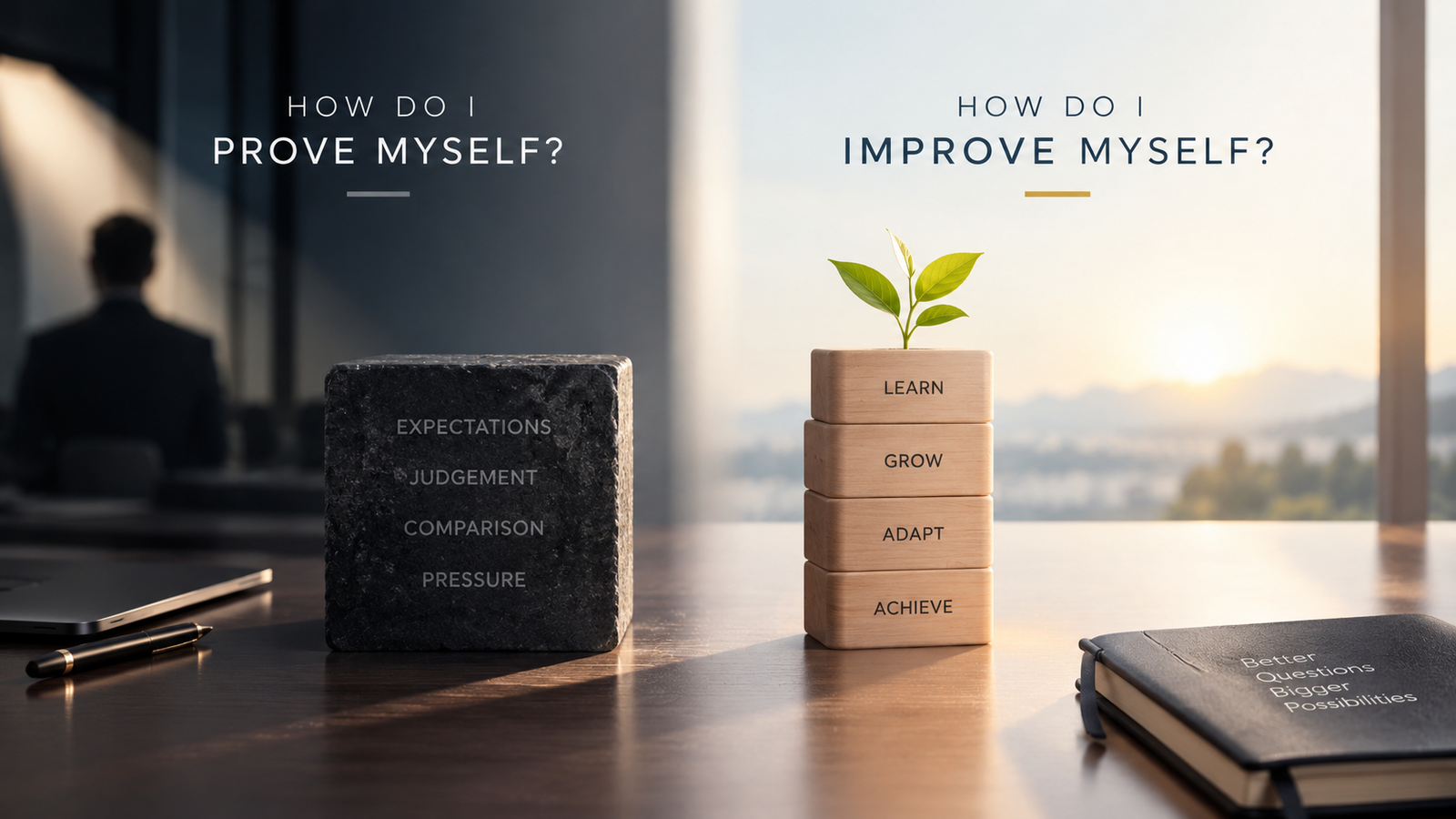
Stop Trying to Prove Yourself. Start Improving Yourself.
Published on October 23, 2026
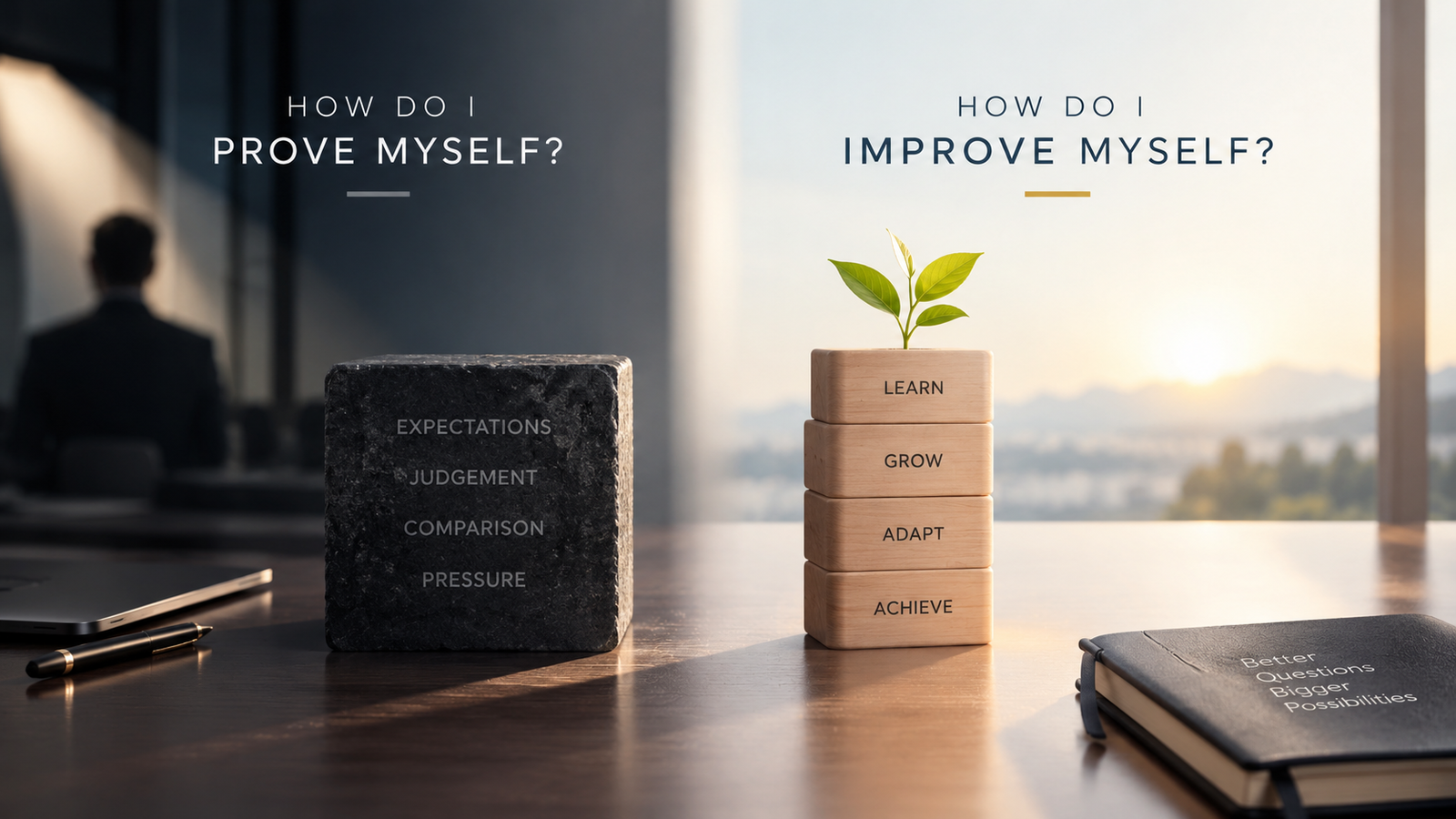
Stop Trying to Prove Yourself. Start Improving Yourself.
What if the biggest obstacle to your growth is your constant need to prove that you are good enough?
Think about it.
In meetings, we want to demonstrate that we know the answer.
When challenged, we rush to defend our decisions.
When someone questions our ideas, we may see it as a threat to our competence rather than an opportunity to learn.
And when we fail, our first instinct is often to protect our image rather than examine our mistakes.
Why?
Because somewhere along the way, we begin to believe that success means proving our worth to others.
But what if we changed that belief?
From proving to improving
In her book Mindset: The New Psychology of Success, psychologist Carol S. Dweck explores how our beliefs about our abilities influence the way we approach challenges, setbacks, and learning.
A fixed mindset encourages us to demonstrate our abilities and avoid situations that might expose our limitations.
A growth mindset encourages us to develop our abilities through learning, effective strategies, feedback, and experience.
The difference is subtle, but its consequences can be significant.
When your primary objective is to prove yourself, a mistake can feel like a personal failure.
When your objective is to improve yourself, a mistake becomes information.
When your objective is to prove yourself, criticism can make you defensive.
When your objective is to improve yourself, criticism can make you curious.
And when your objective is to prove yourself, you may choose the safest option.
When your objective is to improve yourself, you become more willing to explore unfamiliar possibilities.
The question changes from “How do I look?” to “What can I learn?”
That is a powerful shift.
But a change in thinking is only the beginning
It is easy to agree with the idea of continuous improvement. The real challenge is practising it in everyday situations.
Here are four habits that can help.
1. Replace the need to be right with the willingness to understand.
In your next discussion, resist the urge to respond immediately when someone disagrees with you.
Ask yourself: Is there something in this person's perspective that I haven't considered?
You don't have to agree with everyone. But you can learn something without surrendering your point of view.
2. Treat feedback as data, not a verdict.
Feedback may be uncomfortable. It may even be poorly delivered.
Instead of reacting immediately, separate the message from the manner in which it was delivered.
Ask: Is there anything here that could help me improve?
You remain free to reject feedback that is inaccurate. The important thing is to evaluate it before dismissing it.
3. Review your failures without attacking yourself.
When something goes wrong, avoid stopping at “I should have done better.”
Go deeper.
What assumption did I make? What evidence did I overlook? What could I do differently next time?
Reflection becomes valuable when it leads to a change in approach.
4. Measure progress, not just performance.
Results matter. In business, they matter enormously.
But results alone do not always tell us whether we are learning.
Alongside the outcome, examine the quality of your decisions, the assumptions you tested, the feedback you used, and the improvements you made.
The objective is not to celebrate effort regardless of results. It is to make effort more effective.
What does this mean for professionals and organisations?
Consider a manager whose project fails to deliver the expected results.
A prove-yourself mindset may encourage the manager to explain why the failure was not their fault.
An improve-yourself mindset encourages the manager to examine the strategy, question assumptions, identify gaps, and determine what needs to change.
The same distinction applies to leadership, sales, brand management, and business strategy.
An organisation may invest heavily in developing its people's knowledge and skills. But if people are afraid to question established practices, acknowledge mistakes, or challenge their own assumptions, much of that investment may remain underutilised.
Development is not simply about acquiring more knowledge.
It is also about becoming more willing and able to rethink what we know.
The real test
The next time someone challenges your idea, ask yourself:
Am I trying to protect my image, or am I trying to understand the issue?
The next time you make a mistake, ask:
Am I looking for someone to blame, or something to learn?
And the next time you face a difficult challenge, ask:
Am I choosing what makes me look capable, or what will help me become more capable?
You may not always get the answers right. That is precisely the point.
A growth mindset is not about pretending to be perfect at learning. It is about being willing to learn even when doing so challenges your sense of competence.
You don't have to prove that you already have all the answers. You have to remain willing to find better ones.
Perhaps the most meaningful measure of professional growth is not how often we demonstrate what we know, but how consistently we improve the way we think, decide, and act.
Stop trying to prove that you are good enough. Start building the habits that make you better.
An idea inspired by Carol S. Dweck's Mindset: The New Psychology of Success.